Muay Thai Training in the Heat: Why It Changes Your Body and Mind

Training Muay Thai in the heat is not just a cultural experience. It is a physiological and psychological stimulus that fundamentally changes how the body performs and how the mind responds to stress. Whether you are training in Thailand, Houston, or any high-temperature environment, heat introduces a level of constraint that cannot be replicated in a climate-controlled gym. That constraint is what drives adaptation.
For fighters, it becomes one of the most honest forms of training.
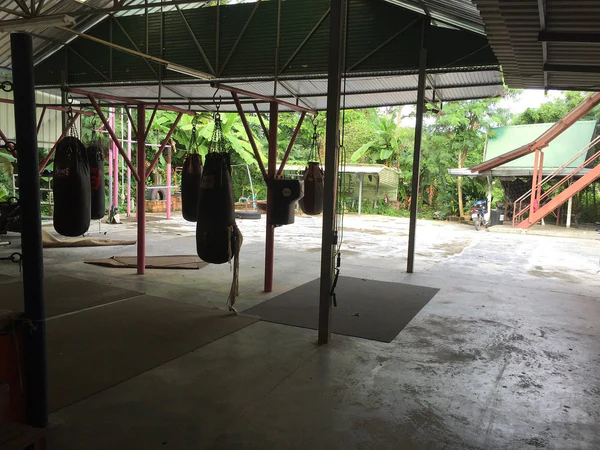
What Happens to Your Body When You Train in the Heat
When you train in hot conditions, your body enters a state of thermal stress. Core temperature rises, and the body begins working to maintain equilibrium through sweating and increased blood flow to the skin. This has direct consequences for performance. Blood that would normally support working muscles is partially redirected toward cooling. As a result, cardiovascular strain increases, heart rate rises faster, and fatigue sets in earlier. Even mild dehydration, around 2 percent of body weight, has been shown to impair endurance and strength output. At the same time, electrolyte loss begins to affect neuromuscular function, which can impact coordination and reaction time. According to research published in sports physiology literature, repeated exposure to heat can lead to measurable adaptations, including increased plasma volume, improved sweat efficiency, and better cardiovascular stability under stress.

Heat Acclimation and Performance Gains
One of the most important benefits of training in the heat is heat acclimation.
Over a period of one to two weeks, the body begins to adapt in several ways:
Increased plasma volume, which supports endurance
Earlier onset of sweating, improving cooling efficiency
Reduced heart rate at a given workload
Improved tolerance to higher core temperatures
These changes allow athletes to perform more efficiently, even when conditions remain challenging.
Some studies also suggest that heat training may improve aerobic capacity and endurance performance, even when returning to cooler environments. For Muay Thai fighters, this translates into better pacing, improved recovery between rounds, and greater resilience during prolonged sessions.
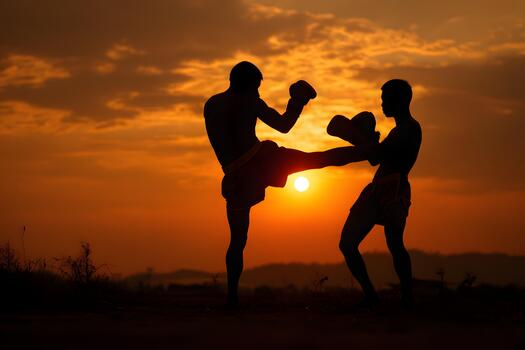
Mental Adaptation: Training Under Cognitive Stress
The effects of heat are not limited to the body. They extend into cognitive performance.
As thermal stress increases, mental fatigue rises. Research shows that high temperatures can impair decision-making, reduce focus, and increase perceived effort. In a fight setting, this can affect timing, accuracy, and composure.
Training in the heat forces athletes to operate under these conditions.
It becomes an exercise in maintaining clarity while uncomfortable. Fighters learn to regulate their breathing, control their pace, and make decisions despite fatigue.
This is one of the reasons training in Thailand carries a different reputation. The environment itself becomes part of the training system.
Why Fighters Who Train in Thailand Feel Different
Muay Thai training in Thailand is often associated with intensity, but the defining factor is consistency. The heat is constant. The humidity is constant. The expectation to perform does not change based on how you feel that day.
This creates a training environment where:
Inefficient movement is immediately exposed
Poor pacing leads to rapid fatigue
Mental lapses are amplified
Over time, fighters adapt by becoming more efficient, more controlled, and more aware of their energy output.
It is not just about technique. It is about rhythm and composure under pressure.
Can You Replicate Heat Training Outside of Thailand?
You cannot fully replicate the environmental conditions of Thailand, but you can apply the same principles. Training in warmer conditions, reducing reliance on air conditioning, and incorporating longer, continuous rounds can introduce similar stressors. Saunas and heat exposure protocols are also used in some training systems to accelerate adaptation. However, the key factor is not just temperature. It is exposure to constraint.
Training should occasionally remove comfort. It should force you to manage fatigue, regulate breathing, and maintain output under pressure.
The Sunset MMA Approach to Training
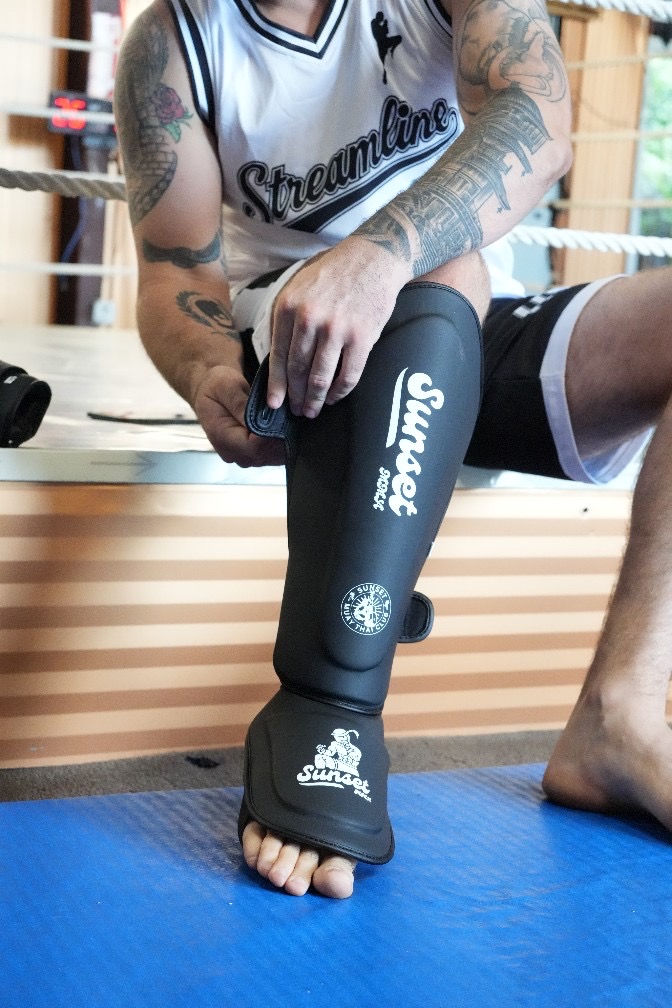
At Sunset MMA, the goal is not to imitate Thailand for aesthetics. It is to carry forward the principles that make that environment effective. Training is not always meant to feel optimized. It is meant to be real. The gear you wear becomes part of that mindset. It should be durable, functional, and built for sessions where comfort is not the priority.
Because those are the sessions that produce change.
Training in the heat does not magically make you stronger. What it does is remove inefficiency and accelerate fatigue, forcing the body and mind to adapt. Over time, this leads to improved endurance, better pacing, and greater composure under stress. For Muay Thai fighters, that combination is what separates training from transformation.


Comments