PHUKET AS A VAGABOND HAVEN
Discipline, Voluntary Precarity, and the Search for Structure in a Globalized Training Economy
written by Johnny Alfi

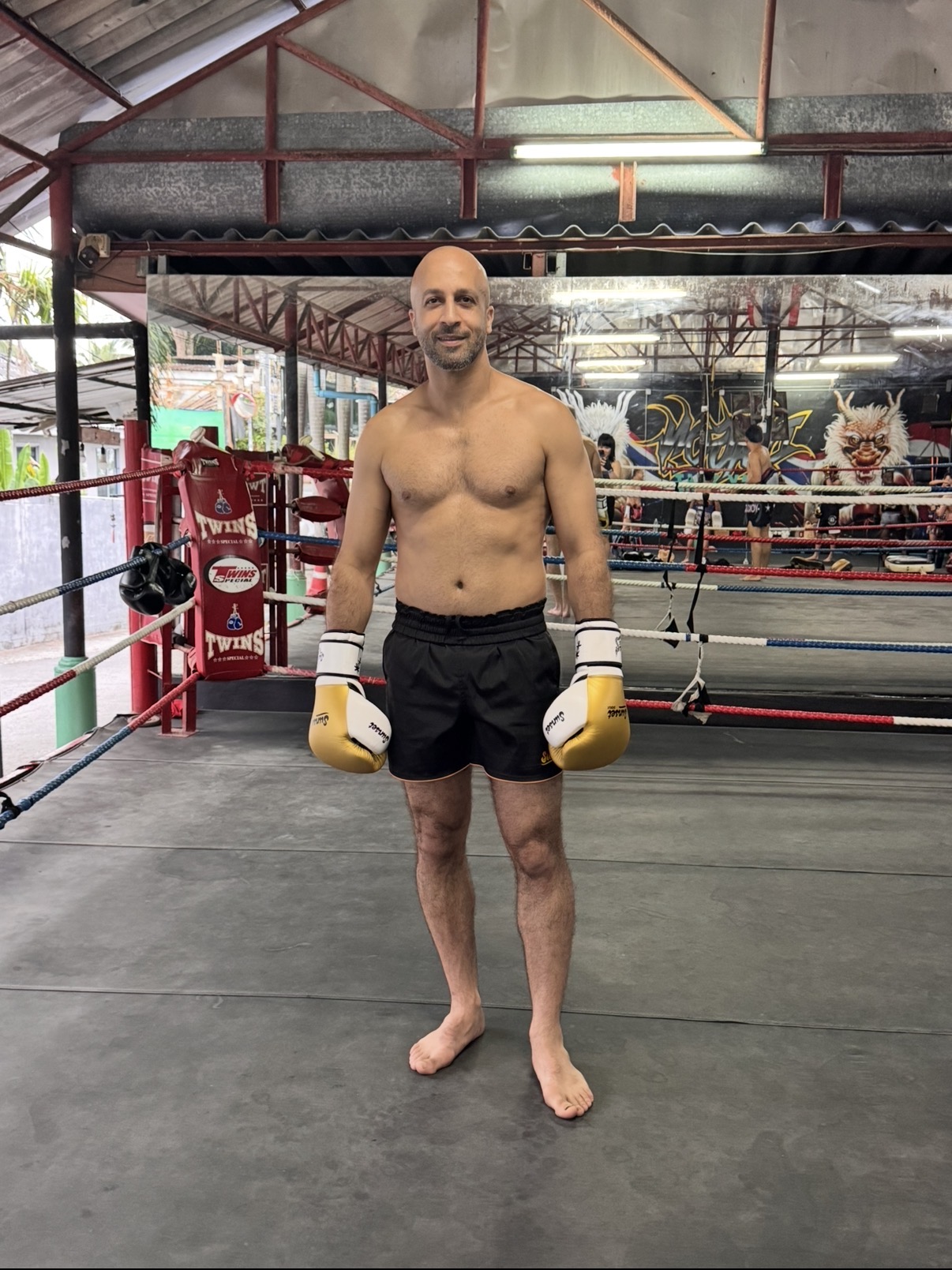
I’ve just come back from two weeks in Phuket, my body still humming from training on Soi Ta Ied, from scooter exhaust, from two hour classes at Tiger Muay Thai I wasn't properly conditioned for, from training at Apollo and the smaller, less branded gyms that don’t advertise but always seem full. Days began with sweat and ended somewhere between Old Town’s crumbling pastel facades and the neon delirium of Patong. Phuket reveals itself in layers: sacred and transactional, disciplined and indulgent, sincere and theatrical. The charm of Old Town’s cafés and shrines sits a windy Grab ride away Patong's spectacle, and both exist in the same breath as the gyms—where the real gravity of the island still lives. It is from this oscillation, between heat and excess, structure and drift, that the question of Phuket as a vagabond haven emerges.
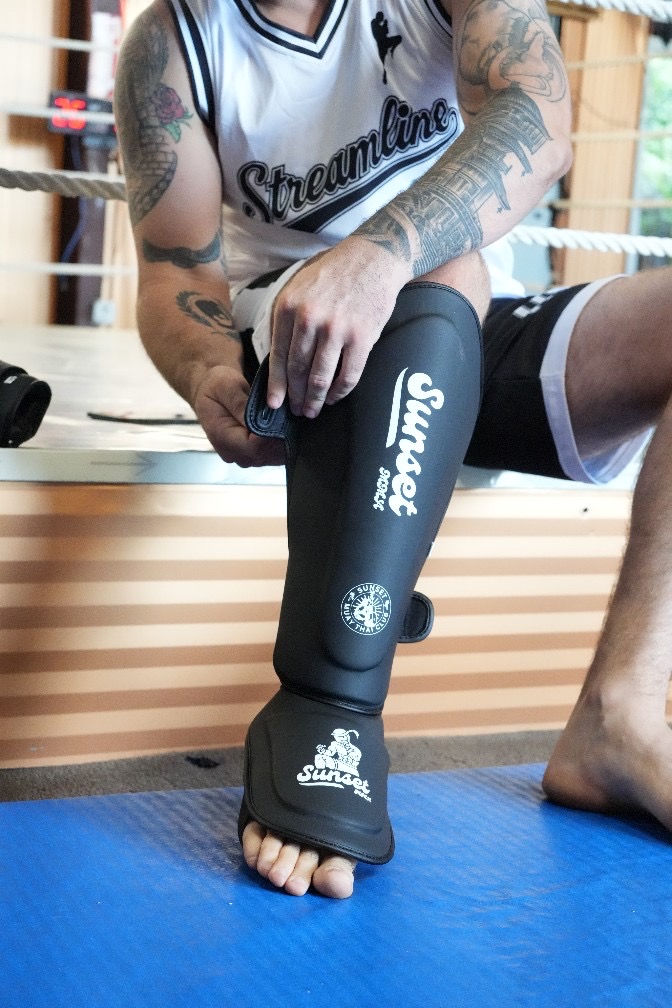
Sunset MMA emerged directly from prolonged exposure to the vagabond ecosystem of Thailand. It was not conceived as a traditional apparel or equipment brand, but as an attempt to materialize a set of values observed in Phuket, specifically, the ways transient practitioners reconcile impermanence with discipline.
The brand was created in response to a noticeable dissonance: while Muay Thai in Thailand is embedded within ritual, hierarchy, and restraint, the global consumer market surrounding it often emphasizes spectacle, excess branding, and disposable novelty. In recent years, established brands such as PRIMO have responded successfully to this tension by stripping away overt symbolism and employing minimalist design as a corrective to exaggerated “fire-breathing” dragon motifs.
Sunset MMA acknowledges the effectiveness of this approach, while seeking a complementary but distinct path. Rather than retreating fully into austerity, the brand aims to preserve the playfulness, warmth, and lived joy present in Thai training culture, without collapsing into irony, cynicism, or post-modern detachment. Its design philosophy treats meaning not as something to be rejected or deconstructed, but as something to be handled lightly, respectfully, and with intention.

The influence of Phuket’s vagabond culture is evident in several dimensions of this project. First, the brand rejects permanence as status. Like the practitioners who pass through Soi Ta Iad, Sunset MMA does not seek ubiquity or saturation. Limited releases, restrained aesthetics, and an emphasis on durability reflect the vagabond preference for use over accumulation.
Second, the brand treats gear not merely as identity signaling, but as behavioral reinforcement that allows for expression. In Phuket, equipment (whether wraps, pads, supplements, or clothing) functions as a daily recommitment to training, a material cue that orients the body toward effort rather than display. Sunset MMA adopts this logic while deliberately extending it into fashion as a form of cultural translation. Rather than rejecting aesthetics, the brand uses design and expression to present Muay Thai as something broader than a niche or exclusively violent sport: a disciplined practice with warmth, humor, and humanity.

Finally, Sunset MMA reflects the moral neutrality of the Phuket environment while still advocating internal constraint. The brand does not prescribe lifestyle choices, nor does it romanticize excess. Instead, it positions its products as tools for individuals navigating freedom with responsibility; mirroring the way Muay Thai itself functions as a stabilizing force within a permissive ecosystem.
In this sense, Sunset MMA should be understood less as a commercial enterprise and more as a cultural artifact:
Phuket, Thailand has emerged over the past two decades as a convergence point for a specific class of modern vagabond: individuals who voluntarily suspend stable identity, geography, and long-term institutional attachment in favor of short-term intensity, embodied discipline, and cultural immersion. Phuket functions not as an escapist paradise but as a "regulatory environment", one in which Muay Thai, infrastructure density, and cultural permissiveness create conditions conducive to self-reorganization rather than dissolution. Through analysis of training culture, urban design, embodied risk practices, and ancillary industries, this article situates Phuket as a contemporary site of structured transience.

Like Paris in the 1920s, and New York in the 1960s, there is something special happening in Phuket, now.
Vagabondage as Strategy, Not Failure
The term vagabond has historically carried connotations of marginality, instability, and deviance. In contemporary global contexts, however, a distinct reconfiguration has occurred. Increasing numbers of individuals, often from developed economies, choose deliberate geographic and professional instability as a response to institutional fatigue, bureaucratic saturation, or creative stagnation.
Phuket attracts this population not because it offers escape from effort, but because it offers concentrated effort without permanence. The island provides a context in which identity can be temporarily suspended while discipline remains compulsory. This distinction is critical. Phuket does not dissolve structure; it replaces inherited structure with earned structure.
Environmental Pressure and the Function of Heat
Environmental stressors play a nontrivial role in Phuket’s appeal. Heat, humidity, and density produce a form of constant low-grade pressure that accelerates adaptation. Unlike temperate environments that permit procrastination or abstraction, Phuket imposes immediacy. Hydration, recovery, scheduling, and sleep acquire operational importance.
This environmental pressure functions pedagogically. It rewards attentiveness and penalizes negligence without moral framing. In this sense, Phuket resembles a laboratory environment: outcomes are observable, feedback is rapid, and inefficiency is costly.

Soi Ta Iad as Intentional Infrastructure
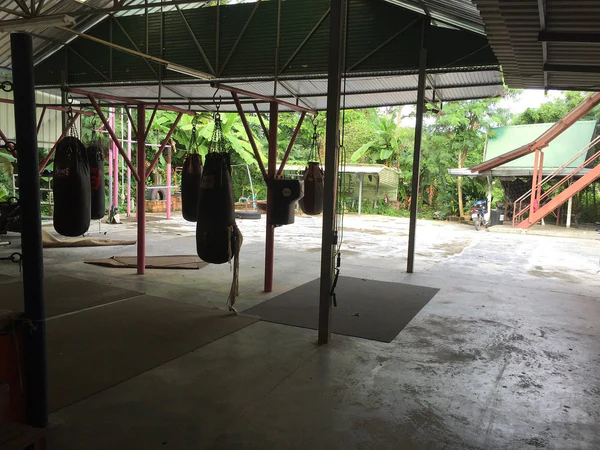
Soi Ta Iad (commonly referred to as “Fitness Street”) represents a rare example of purpose-built informal infrastructure. Gyms, short-term housing, food vendors, recovery services, pharmacies, and ancillary shops are co-located within walking distance. This density minimizes logistical friction and maximizes behavioral consistency.
The street’s significance lies not in aesthetic cohesion but in functional compression. Individuals need not navigate competing value systems. Training, nourishment, recovery, and social interaction are aligned around a single axis: physical discipline.
This alignment reduces cognitive overhead and enables individuals in transition to stabilize routines rapidly.

Risk, Marking, and the Willingness to Participate
Several practices commonly observed among long-term residents. For instance, motorbike use, tattoo acquisition, and engagement with performance-enhancing or recovery substances, should not be interpreted reductively as self-destructive tendencies. Instead, they reflect a broader willingness to participate materially in the environment.
Motorbike riding, for instance, is less a symbol of rebellion than of competence. It requires attentiveness, calibration, and acceptance of responsibility. Tattooing functions as a commitment device; a semi-permanent acknowledgment of presence and duration in a transient life phase. Pharmacies offering protein supplements, hormones, or recovery aids reflect the normalization of the body as a managed system rather than a static given.
These practices indicate not nihilism, but agency under conditions of choice.

Moral Neutrality and the Absence of Judgment
One of Phuket’s defining features is its lack of moral narrative. Sex work, wellness culture, athletic ambition, and spiritual practice coexist without hierarchy. This neutrality forces individuals to self-regulate. Without external moral scaffolding, intention becomes visible through behavior rather than declaration.
For many, Muay Thai provides the internal constraint necessary to navigate this neutrality productively. Training commitments anchor decision-making and orient daily life toward sustainability rather than excess.
Why Phuket Retains Rather Than Repels
Phuket retains vagabonds because it allows temporary lives to feel consequential. Progress is felt in the body. Community is formed through shared effort rather than biography. Departure remains possible, but stagnation does not.

Those who remain longer do so not because they are trapped, but because the environment continues to reward attentiveness, discipline, and restraint. These phenomena are omnipresent throughout jiu jitsu academies as well. But it's all more powerful in the dramatic beach landscape of free-society Phuket. The island functions as a vagabond haven not by offering escape, but by offering a narrow corridor in which freedom is paired with consequence. It attracts individuals willing to relinquish inherited stability in exchange for earned structure. Through Muay Thai, infrastructural density, and cultural neutrality, the island enables periods of reconstruction that are neither chaotic nor permanent.
In a global landscape increasingly defined by abstraction and institutional mediation, Phuket offers something increasingly rare: a place where effort is visible, discipline is shared, and transience is productive. For the modern vagabond, this is not paradise. It's something more useful. Useful, perhaps, as a pair of Muay Thai shorts with pockets.
Johnny Alfi is a published writer with an MFA in Creative Writing whose work explores masculinity, institutional power, and the uneasy overlap between discipline and decay. He has taught writing at CUNY Brooklyn College, where he focused on craft, voice, and narrative structure. He is currently at work on his novel Skull Anatomy, a first-person examination of medical bureaucracy, moral erosion, and the interior lives of men under pressure.

Comments